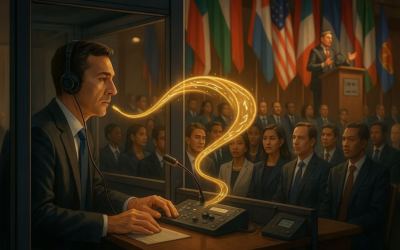
Artificial Intelligence has moved from being a future promise to becoming a daily presence in our work as interpreters. Denying it would be naïve; embracing it without questioning it would be dangerous. As with any powerful tool, AI amplifies both our strengths and our vulnerabilities.

Language Global Solutions
The LGS Blog
Language News & Insights from the LGS Team
View services
Request a quote
WhatsApp us
Does the Interpreter Have Their Own Voice — or Do We Merely Borrow Someone Else’s?
After more than 50 years interpreting for global leaders, Olympic athletes, scientists, and policymakers, I’m still asked a question that cuts to the core of our profession: Are interpreters just invisible messengers — or are we co-protagonists in the communication process?
Precision versus Accuracy in Interpretation and Translation
In interpretation and translation, both accuracy and precision are essential.
What’s Important and Needed in Language Services
Clear and precise language is crucial in conveying messages, building relationships, and facilitating international business.
No human interpreters today!
The Day the World Went Silent: A Thought Experiment on a Future Without Human Interpreters
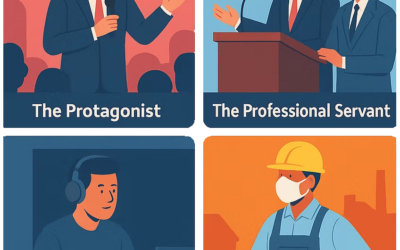
The Many Personalities of an Interpreter
After more than five decades in this profession, I have learned that there is no single type of interpreter. We are a diverse community, yet we all share something in common: the desire to serve and the ability to turn emotions into words.
The Privilege of Becoming Who We Truly Are
Is interpreting a calling? An addiction? A craft? A gift? A skill? Maybe it’s all of these. Or maybe it’s something that runs so deeply in us that we can’t imagine being anything else. When we step into the booth, we’re not just transmitting words—we’re lending our humanity to another voice.
Are Simultaneous Interpreters Born or Made?
After decades in booths across the globe, my answer remains the same: interpreters are made. But they must be born with a few key wires already in place.
The Dark Side of Conference Interpreting
In over 50 years of walking this fascinating and demanding path of conference interpreting, I have often heard a phrase that stayed with me: “This is a throat‑cut profession.” What does it mean?
Bilingualism Isn’t Enough
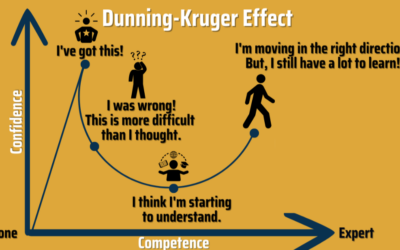
One cognitive bias that we in the booth know all too well is the Dunning-Kruger Effect: the tendency for individuals with limited knowledge in a domain to overestimate their competence, while true experts often underestimate theirs. In interpreting, this psychological phenomenon is not just theoretical — it’s operational. And it has real-world consequences.